Wednesday, March 5, 2014

World Read Aloud Day

I got the most exciting Twitter direct message last evening. Erin Olson, who is a Technology Integrationist at Prairie Lakes AEA, had a last minute reading partner, NASA Goddard, looking for a class to Skype with. The chance for our students to Skype with NASA folks? Yes, please! While holding one phone with Erin's texts, I grabbed my other phone and started texting one of the teachers I knew I could probably still reach at school at 6:00 at night and who would be willing to go with the flow and change what was going on in her classroom even with such short notice, and Jacquie Drey said, "Yes, please!"


What a wonderful opportunity for some of our 4th grade students, both Mrs. Drey's and Ms. Fisher's. Karen Fox, a physicist and heliophysics writer, and Aries Keck, the social media team lead, not only read from their own book, Einstein A to Z, but they also answered student questions. They shared what they were personally reading with the students and told them to keep reading all kinds of different books. They told them to not be afraid to contact people in different professions or authors of books they really like, because those people really like to hear from students who are interested in the same things they are. They emphasized the importance of the network of people you connect with. You never know how they might even influence your chances at a new job someday. Then they encouraged the students to go to www.nasa.gov, to see all the wonderful resources there, including rockets taking off!


It was just a wonderful thirty minutes of sharing a love of science, reading, and learning.

Across the street at the Middle School, Caitlin Buchholtz's students Skyped with Denise Krebs, an American teacher who is now teaching kindergartener's in Bahrain. With a 14 hour time difference, Mrs. Krebs read two books to some of our 5th grade students.


Caitlin writes:

We discussed the characters' feelings & actions in the first book and talked about the lesson we could learn from the 2nd. The 2nd book was about a child's actions in Bahrain. A few students shared connections they made with the stories & also with Denise. Denise began by answering some questions we had for her. Some of them were: What languages do your students speak? What languages does she teach? What does school look like and how long is school where they are? Bahrain is a small island country by the Persian Gulf, Saudi Arabia, & Iran. The students were able to make great connections to her moving, language barriers, learning languages, and also the characters' situations in the story.


Thanks so much to the readers from NASA and Bahrain, to Erin Olson who made arrangements, to the teachers who participated, and especially to the students who asked such great questions. What a great experience! What a great way to show our students how much learning there is to be shared not only within the school walls but also without! Twitter was lit up with all the players involved live feeding the two events, and there were many more tweeps who passed on the good news.

@eolsonteacher

@JBDrey

@Fish_Mel

@CaitBuchholz

@NASAGoddard

@NASAGoddardPix

@Aries

@TheFoxAndTheSun

@mrsdkrebs

@sfreking


Saturday, March 1, 2014

We Must Engage Our Students

I just finished re-reading Dave Burgess' book, Teach Like a PIRATE. It was published a couple of years ago, and it is one of my favorite books about teaching. Rather than a focus on generalized standards or district-wide instructional strategies (which are also important), Dave's focus is on what each teacher and student individually brings to the classroom. He emphasizes the importance of the relationships we build with our students.

His premise is that we as teachers need to create an environment that our students want to be a part of. We do this by using our creativity to create lessons that actively engage our students in learning. We make our classrooms so appealing that our students wouldn't think of being absent, and since they are there and engaged, we are teaching them what they need to know. How do we do that? To get the full picture you need to read the book!

However, I can give you a taste to entice you.

First, we must let our passion show - our passion for our subject matter and our passion for teaching, as well as using the passions we have in our personal lives as ways to relate to and hook our students. Second, we must immerse ourselves in our teaching. Dave's example is the difference between the swimming coach who coaches with words from the side of the pool and the coach who gets in the water and demonstrates and actually helps with the students' strokes. Third, we must develop positive relationships with each of our students. We must really get to know them as people, not just as subordinate students. Fourth, we must ask ourselves the right questions to determine the very best ways to teach what it is we're teaching. Fifth, we must transform our content. We must show how what our students are learning will be valuable and relevant to their lives. We must make connections between the learning and the real world. Finally, we must be enthusiastic in our classrooms. There is no place for any less than our very best for every class, every day.

Dave had my attention immediately because of two things.
  1. He began his theories about teaching with passion and ended with enthusiasm. I agree with Dave: Give me teachers with those two traits, and I can help them become better teachers.
  2. He groused at people who said that unlike themselves, it was easy for him, because he was a creative person. ARGH! How many times have people said to me that integrating technology was easy for me, because I am a techie person? ARGH! First, that belittles the years of work and learning that each of us have invested to get to the place that what we do looks inborn and easy. Second, what a convenient excuse to not do the work that it takes to become a better teacher.
I'm not going to say anymore, because I want you to read the book. I want you to go see Dave's sessions if you ever happen to be at a conference where he is presenting. You'll know by the pirate costume. I've seen it!

Dave Burgess validates my belief that we must do whatever it takes to increase student learning. It's our job. Yes, you will find his methods over the top. However, by seeing teaching through the eyes of someone who is willing to go over the top, we are able to honestly examine our own techniques in the classroom. Only then can we determine how we can bring our A-Game to school every day and help our students do the same.

Thursday, February 20, 2014

Relationship is Everything

I have long believed that relationship is everything, and Rita Pierson agrees with me. She says,

"Kids don't learn from people they don't like."


Take a look at her TED Talk:

Rita Pierson: Every Kid Needs a Champion

Sadly, Rita Pierson passed away a few months after delivering this TED Talk. Here are some words of remembrance:

Remembering Educator Rita F. Pierson

What do you think? Do you still believe in the old adage that you don't dare smile until Christmas?


Friday, February 14, 2014

It's Not the Technology

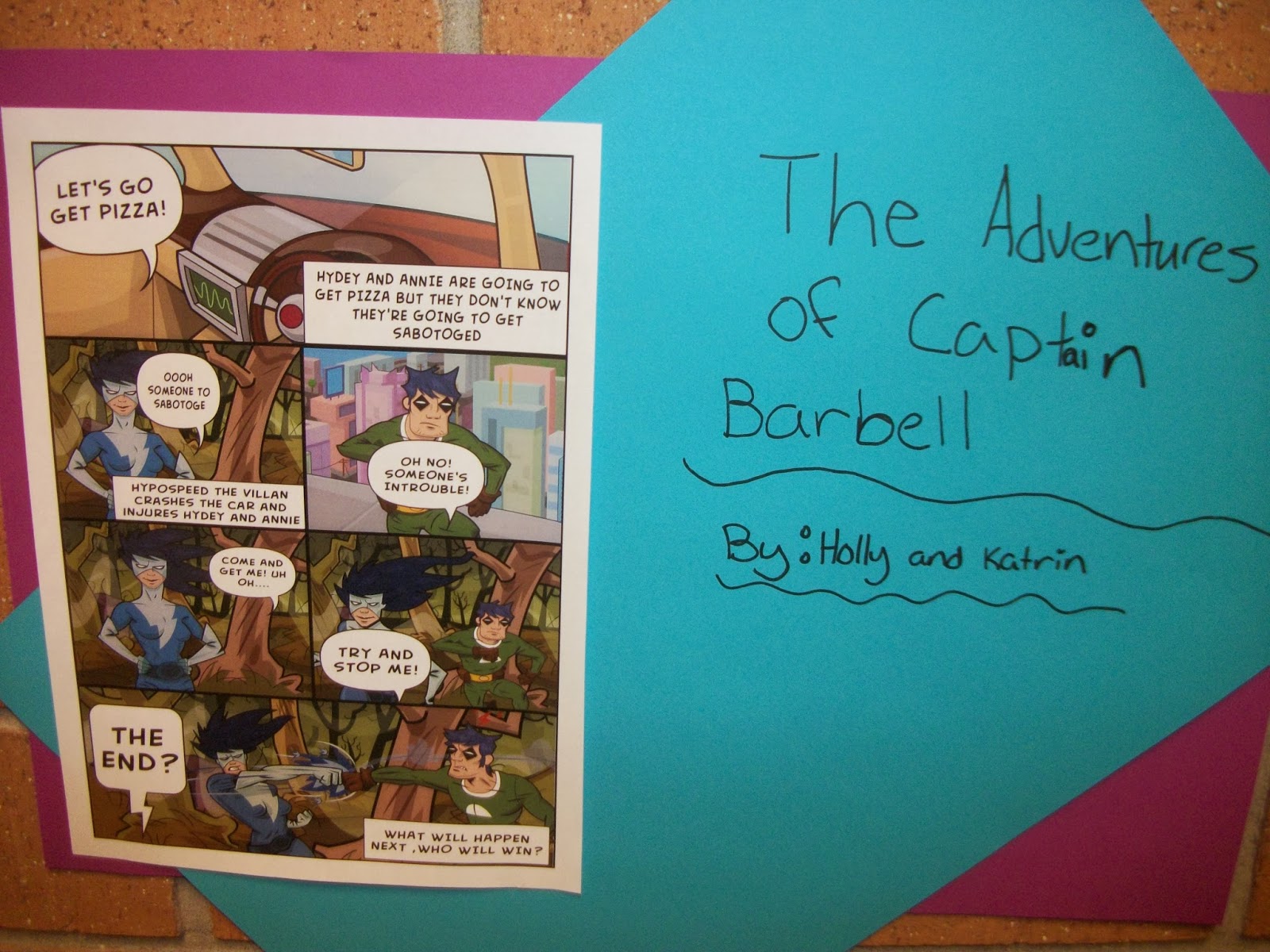
I just got an email from our Middle School Media Specialist/Teacher Librarian, Jen Cole, about Comic Master where you can create short graphic novels:

http://www.comicmaster.org.uk/


Here's what she said:

"Thanks for this website, Sarah. It was just the hook I needed. I started with rough drafts for students to create before they could get computer access; once I approved those that was their ticket to the website. I told them stories needed one to four characters, a problem, a solution, or if they wanted to write a part 2 they could have a "to be continued" ending.

I am going to use this to scaffold my writing expectations, I have 5-8 grade so some need more of a challenge than others in terms of detailed plots and amount of text.

Here are the pictures, I'm so excited about their engagement, a few of the more pessimistic ones were really self motivated and pretty creative."


This is such a great example of focusing on what we want students to be learning and then using a tool to do that. Writing effectively is one of the most important skills I use in my job. I can think of few jobs where writing isn't important. And, we already know how writing and reading are inextricably connected. If we can take an online tool that motivates students to practice their writing skills, then we've succeeded.


Once again what we see is that curriculum and technology can't be separated. We wouldn't be talking about paper and pencil off on one side and curriculum on the other. The same is true for technology. There should be no separation. Curriculum is curriculum. However, technology takes us so much further than we could go in the past. The students plan, write, edit, and share their graphic novels. They can peer review each other's. They can share their writing with the world. They could even collaborate on a graphic novel. The possibilities are endless. What's important isn't the software or the website or the computer skills. What's important is the planning, the writing, the creating, the editing, the sharing, and the collaborating.


Thanks so much, Jen Cole and students, for sharing!

Wednesday, January 29, 2014

Libraries are Spaces of Learning

I got my first library card practically the day I started to learn to read.


My parents are well educated, extremely well read people, and I can still conjure up the way I felt as my first grade teacher, Mrs. Rovere, unwrapped the magic of reading to me. My folks had read to me, probably since the time I was born, but to be able to read things myself . . . I was seriously delirious with the new skill!


The library was a vast storehouse of information, adventure, and learning. From picture books with just a few words to my first chapter books to books that were well within my reading ability but probably beyond my maturity level, they were all there for the taking, and I literally absorbed the freedom and the learning.


Today in education we debate about the best way to bring information to our students. We debate about the merits of traditional books versus digital books. We debate about the appropriate uses of the Internet for learning. We debate about the best devices for accessing the Internet. We debate about whether we should put restrictions on what students can access on the Internet. We debate about the role of teachers in classrooms, and we debate about the role students need to take when it comes to learning. All of these things are worthy topics of conversation and deserve careful consideration.


What should not be open for debate, though, is the school library. Libraries, whether full of books on shelves or electronic information through technology, should be the heart of the school. I reach back to my childhood and my young adulthood and think about the special times I spent in libraries. I think of the learning that took place there and the relationships forged there, and I think of how important the public spaces for learning are. I remember:

  • Storytime as both a child and a young parent
  • Picking out storybooks for reading aloud
  • Finding just the right book for the mood I was in as I started to read myself
  • Checking out copies of books my teacher was reading to us
  • Finding books my parents had read as children
  • Finding the book about the topic we were studying in the classroom
  • Digging through periodical catalogs and card catalogs for resources for the papers I wrote
  • Craft time
  • Studying for final exams
  • Collaborating with my classmates on classroom projects
  • Writing debate card after debate card in hopes of winning that next tournament
  • Being awarded the trophy right there in that library when my teammates and I were successful
  • Accessing the Internet before I had it from home
  • Class meetings
  • After school activities
  • Guest lectures
  • Meet and greets

As an adult I still find libraries of all kinds extremely important. I don't care if there are books on the shelves or eReaders for checkout or computers or mobile devices. The library is the space people of all different ages with all different interests and all different motivations come together to learn and to celebrate learning. I love the history. I love the smell. I love the people who choose to work in libraries. And, I can't imagine a school without that heart.


Stay curious. Keep learning. Read.

 
Photo by Martin Gonzalez

Wednesday, January 8, 2014